
When Both People Think They’re Being Clear: The Double Empathy Problem at Work
Sometimes workplace communication fails not because one person cannot understand, but because two people are reading the same interaction through different social expectations.
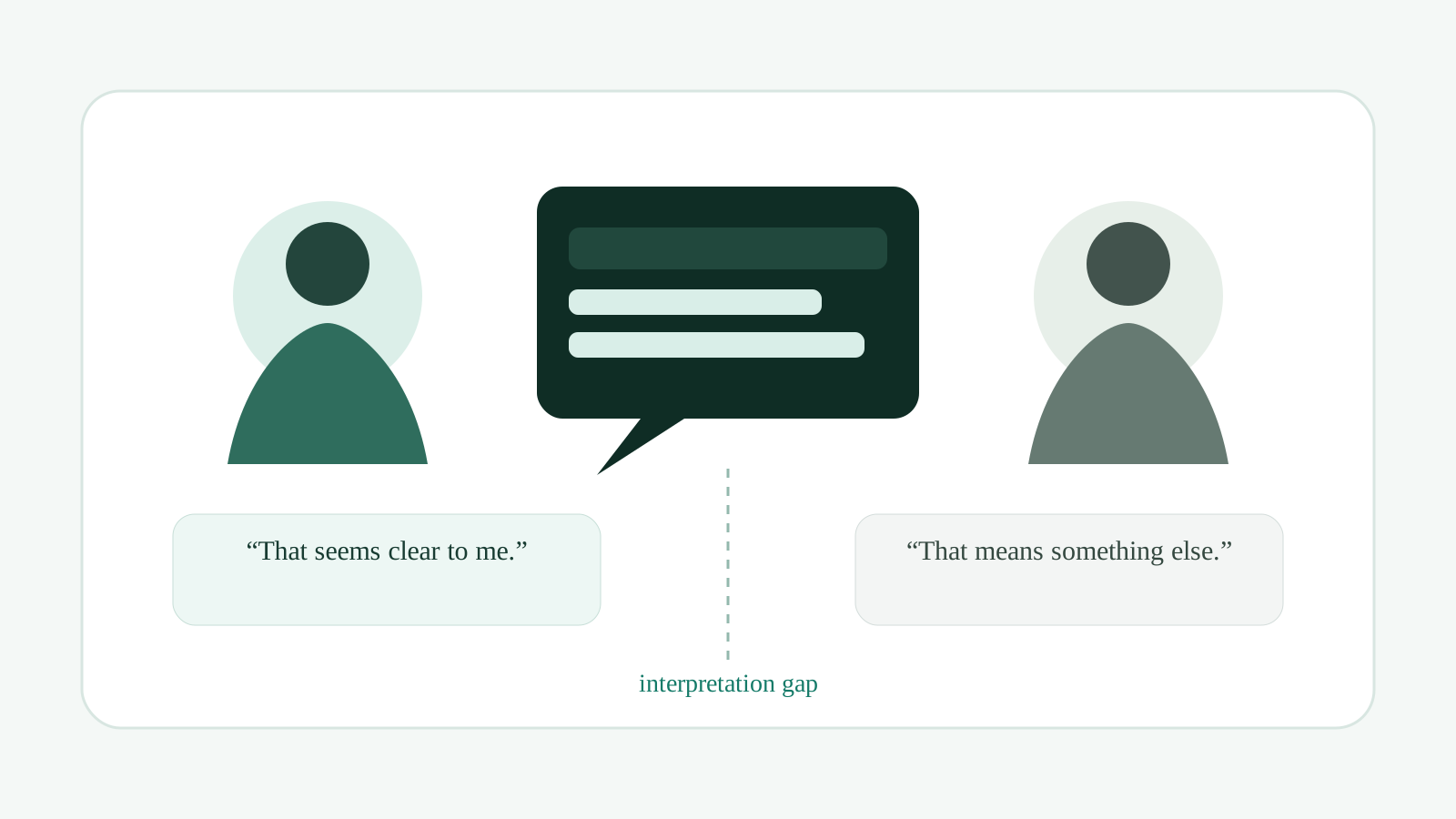
Workplace misunderstandings are often described as if there must be one person who “missed the cue.” In autism, that person has traditionally been assumed to be the autistic employee.
The double empathy problem offers a different explanation. It proposes that when autistic and non-autistic people have different ways of communicating and interpreting social information, misunderstanding can run in both directions. The difficulty sits in the interaction, not automatically inside one person.
1. Clear to one person can still be incomplete to another
Research with autistic employees repeatedly identifies unclear communication as a workplace problem. Autistic workers have described being expected to infer procedures, priorities or role expectations that colleagues assumed were obvious. Other studies have found that performance feedback can be difficult to understand or too vague to be practically useful.
This creates a subtle mismatch. A manager may believe they have explained enough. The employee may genuinely lack the information needed to know what “good” looks like. If the employee asks for more detail, that request can then be interpreted as dependence rather than as an attempt to remove ambiguity.
Both people can leave the interaction believing they communicated reasonably.
2. The misunderstanding does not only go one way
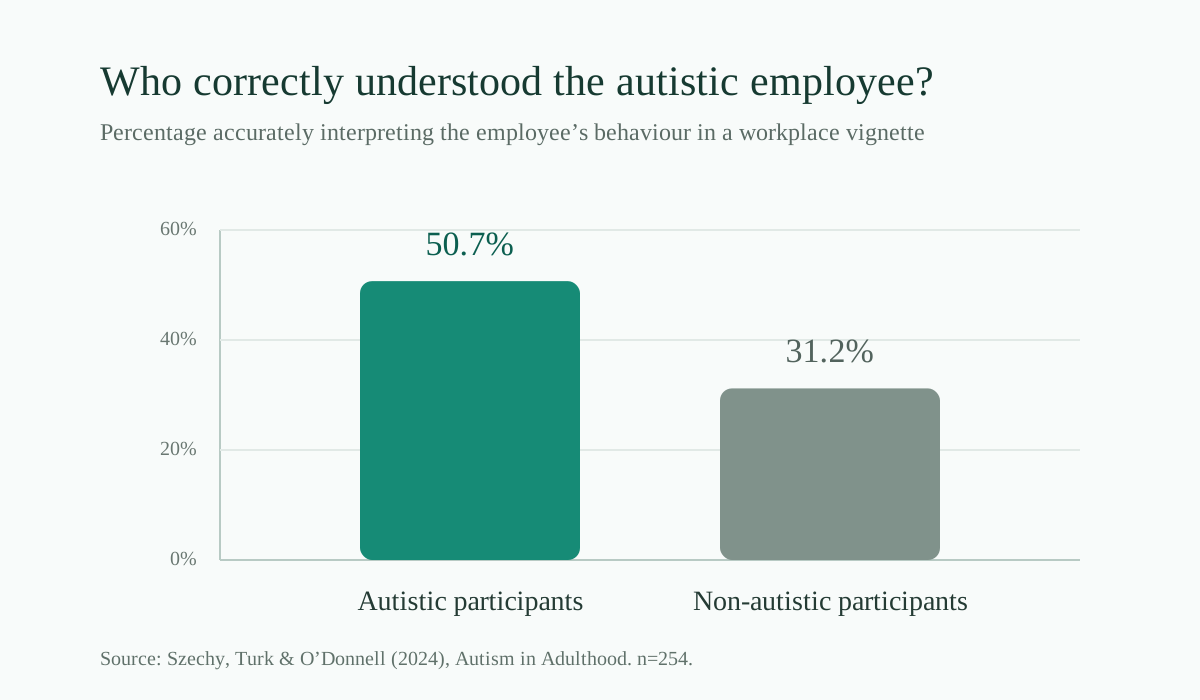
A 2024 workplace study tested this directly. Researchers gave 254 autistic and non-autistic adults a vignette about an autistic employee having a difficult day at work and asked them to interpret the employee’s behaviour and emotional state.
Autistic participants were more likely to interpret the autistic employee accurately: 50.7% did so, compared with 31.2% of non-autistic participants. The result does not mean autistic people always understand other autistic people, or that non-autistic people cannot. It does show why it is too simple to describe autistic workplace communication only as a deficit in reading other people.
3. Politeness can hide information
Many workplaces reward indirectness because it can sound tactful. But tact and clarity are not always the same thing.
Feedback such as “there are a few areas we might want to revisit” may be intended as a serious request for revision. A colleague who relies more heavily on explicit wording may reasonably interpret it as a mild suggestion. Conversely, a direct statement intended as efficient problem-solving may be heard by someone else as unusually cold or confrontational.
The important point is not that one communication style is superior. It is that people can attach different social weight to the same wording.
4. The useful question is not always “Who got it wrong?”
Workplaces often respond to misunderstanding by teaching the neurodivergent employee to adapt harder: infer more, soften more, notice more, ask fewer “obvious” questions.
Research on autistic employment points toward a more balanced approach. Clear expectations, direct feedback, written guidance and accessible routes for clarification can reduce the amount of interpretation everyone has to do. These are not exotic accommodations. They are communication practices that make the intended meaning easier to verify.
That matters because repeated misunderstandings can affect more than a single email or meeting. They can shape whether someone is seen as capable, cooperative, engaged or difficult.
5. Making the interpretation gap visible
There is often a small but consequential space between what I meant and what you are likely to hear.
That is the space Cuevera is designed to make easier to inspect. What They Mean looks at the likely function of someone else’s wording, including indirect or implied meaning. How I Sound turns the same question around and shows how your own wording may be received.
It is not a verdict on who communicated correctly, and it cannot know another person’s mind. It gives the user another reading of the interaction before they have to rely on one interpretation alone.
Sometimes the most useful communication support is not telling someone what to say. It is showing them where two reasonable interpretations may have separated.
References
Szechy, K. A., Turk, P. D., & O’Donnell, L. A. (2024). Autism and Employment Challenges: The Double Empathy Problem and Perceptions of an Autistic Employee in the Workplace. Autism in Adulthood, 6(2), 205–217.
Romualdez, A. M., Walker, Z., & Remington, A. (2021). Autistic adults’ experiences of diagnostic disclosure in the workplace: Decision-making and factors associated with outcomes. Autism & Developmental Language Impairments, 6.
The Lived Experience of Autistic Adults in Employment: A Systematic Search and Synthesis.
Cuevera helps make the space between what was said and what may be understood easier to inspect.