Workplace communication support for neurodivergent adults

Understand what they mean.Know how you sound.

Cuevera helps neurodivergent professionals interpret workplace subtext, tone and indirect language, and understand how their own messages may be perceived.

Add Cuevera to Chrome
10 checks every day.
No email or credit card required.
What They MeanHow I Sound
Two colleagues discussing work in a modern office
“I guess I’ll just take care of it myself.”
CUEVERA
WHAT THEY MEAN
This likely expresses frustration or disappointment. They may be implying that they expected someone else to handle it.

Workplace communication rarely stops at the literal sentence.

Cuevera helps make the implied meaning easier to assess.

Why Cuevera

Workplace messages often depend on inference.

Tone, indirect requests, social expectations and context can all change how a message is understood.

01

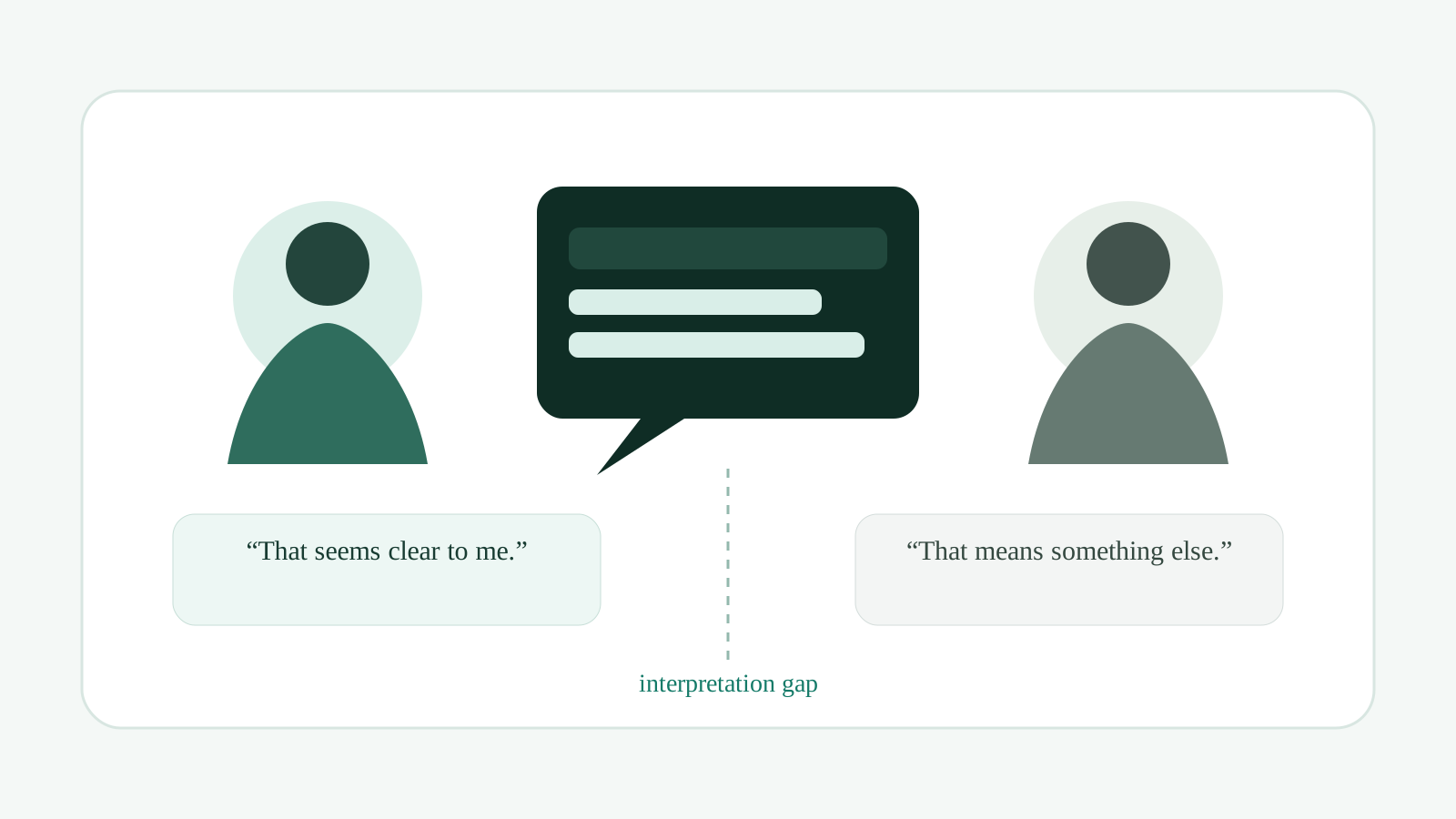
Literal language meets indirect language

The National Autistic Society notes that unclear instructions, sarcasm and irony can create difficulties for some autistic employees. Direct or literal communication can also be misread by colleagues as rude or blunt.

National Autistic Society
02

Reading the words is not the same as reading the subtext

CHADD describes how adults with ADHD may miss subtle nuances, struggle to read between the lines or lose details while also trying to follow the main conversation.

CHADD
03

The workplace itself creates part of the problem

Research on autistic employment repeatedly points to unspoken social norms, difficult-to-interpret feedback and workplace structures that assume everyone reads the same cues in the same way.

Research synthesis
Common workplace ambiguity

A short message can raise several plausible interpretations.

“Was that a request or a suggestion?”

“Were they annoyed, or just brief?”

“Did ‘no rush’ actually mean no rush?”

“I meant to be direct. Did I sound angry?”

How it works

Interpret incoming messages. Check outgoing tone.

WHAT THEY MEAN

Interpret the message you received.

Select a sentence to assess likely subtext, sarcasm, passive-aggressive language, indirect requests, idioms, workplace jargon and implied urgency.

“Because nothing says ‘we value your time’ like voluntelling us our Saturday is free.”Team chat
WHAT THEY MEAN
This is sarcastic. They do not want to attend and feel their time is being taken without real choice. They are frustrated.
HOW I SOUND

Check how your message may be received.

Before sending a message, review how the wording may come across, including whether it could read as blunt, urgent, cold, defensive or demanding.

“You still haven’t sent the report I asked for last week. Please send it today.”Your draft
HOW I SOUND
This may come across as impatient and demanding. The deadline is clear, but the wording may put the other person on the defensive.
Team collaborating around a computer in an office
Clear communication

Important work should not depend on avoidable ambiguity.

Clear instructions reduce uncertainty, but real workplaces still rely on implication, tone and informal language. Cuevera provides an additional check when those signals are unclear.

Read the workplace guidance
Photo: Vitaly Gariev, Unsplash
Cuevera Journal

Research and analysis on neurodivergent workplace communication.

Read all articles

Workplace communication should be clearer.

Understand what they mean. Know how you sound.

Add Cuevera to ChromeNo credit card required.